 Free quote
Free quote
Free quote
Commercial Lighting
Permanent architectural LED lighting for North Georgia businesses — retail, restaurants, venues, hotels, HOA entrances and business parks. (770) 630-4653.
Commercial permanent lighting is the same low-profile LED channel we install on homes, specified for a building that has to look consistent every night, change on demand, and never require anyone on a lift in December. It runs rooflines, parapets, entryways, signage bands and canopies. It is zoned, scheduled, and controlled from an app, so a property can hold a single brand colour all year and still switch to holiday or promotional colour without a work order.
Bridges Lighting Pros works with businesses across North Georgia. Call (770) 630-4653 for a site walk.
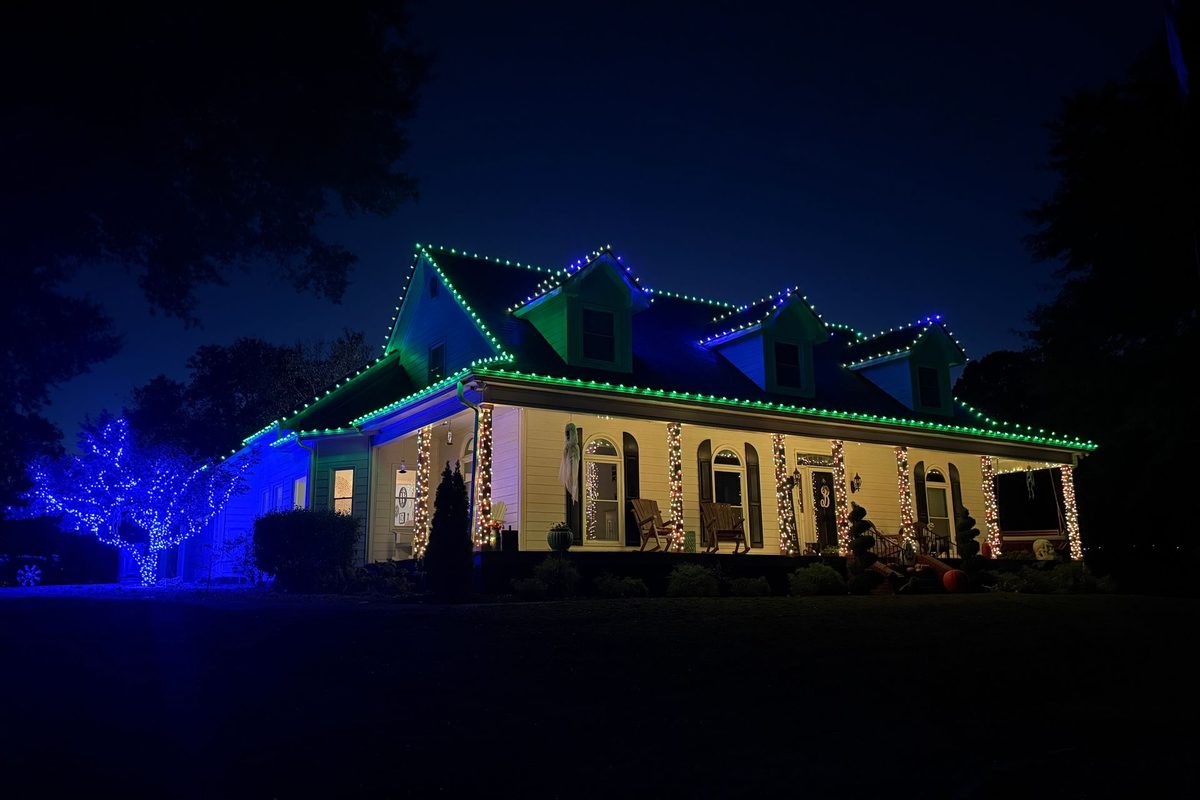
Retail centres and storefronts. A lit roofline reads as open and maintained from the road at a distance where signage is not yet legible. For a strip centre it also does something for tenants — a consistent light line makes an uneven set of storefronts look like one property.
Restaurants and breweries. Building lighting plus patio and bistro lighting is the difference between a patio that fills after dark and one that empties at sunset. Colour scheduling covers holiday service, private events and seasonal menus.
Wedding and event venues. A venue that can change its exterior colour per event is selling something its competitors are not, and it costs nothing per event once the system is in.
Hotels and hospitality. Approach lighting and roofline definition, on a schedule that runs itself and does not depend on a night manager.
Office buildings and business parks. Low-key architectural definition, entrance legibility, and a property that does not look abandoned at 7pm in January.
HOAs and community entrances. Monument signage, entry columns and the landscape around them, on a timer, maintained under one contract instead of being the amenity nobody on the board wants to own.
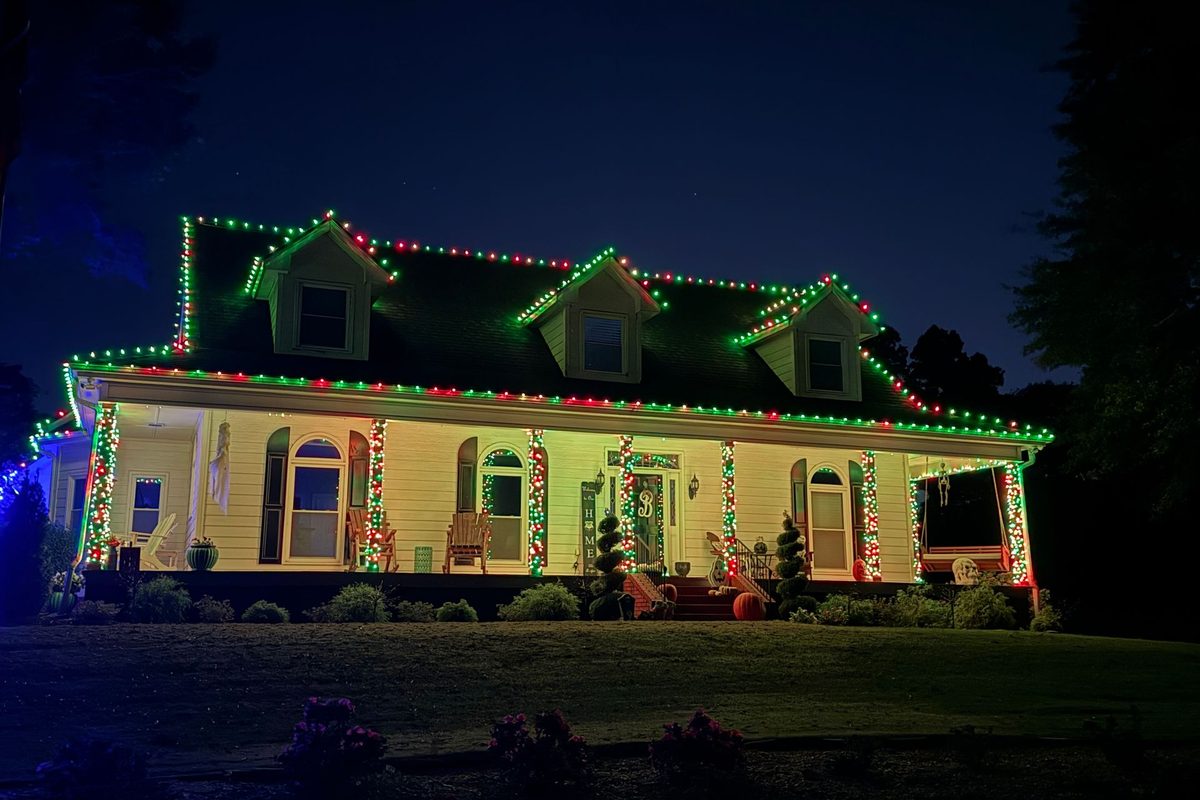
On a house, a permanent system is usually one zone doing one thing. On a commercial building it is worth splitting.
A typical layout separates the main roofline, the entrance canopy, signage surrounds and any patio or landscape lighting into individually controllable zones. That lets a property run neutral white on the building and brand colour on the entrance, dim the patio after last seating without touching the facade, or light only the signage band on nights when the rest is unnecessary.
Scheduling then removes the human step entirely. Dusk-on, set-time-off, seasonal scene changes queued in advance. Nobody has to remember, and nobody has to be on site to make a change.
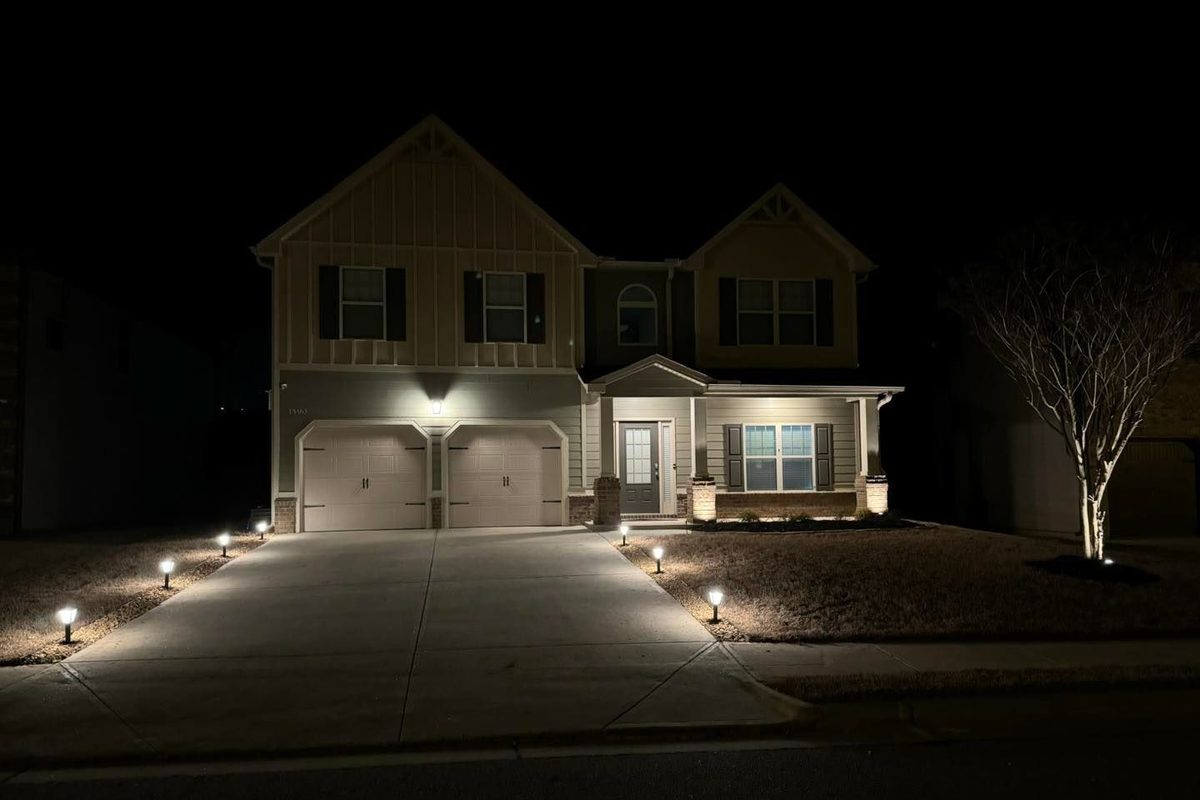
Commercial installs get specified harder than residential ones. Longer runs mean voltage drop has to be planned rather than discovered. Parapet and metal-panel buildings need different mounting from residential fascia. Roof access, tenant hours, customer parking and — on multi-tenant properties — who owns which elevation, all shape how the work is sequenced.
The channel is colour-matched to the building, the wiring is concealed, and the whole system is built to stay in place through weather rather than to be taken down. That is most of the value proposition: a property that never again pays a crew to install and remove seasonal lighting, and never has a lift blocking the front entrance in November.

Included
Typical range: Quoted per property
Coverage
Questions
Yes, and that is usually the reason a business installs one. The default scene is clean white or a brand colour running nightly. Holiday, promotional and event colour is a scene change from an app, scheduled ahead if you want it queued.
The practical consequence is that seasonal lighting stops being an annual purchase-and-install decision. It becomes a setting.
The channel is colour-matched to the surface it mounts on and sits tight to the roof or parapet line. At customer-viewing distance during the day it reads as trim. This matters more on commercial buildings than residential ones, because a customer stands closer to a storefront than to a house.
Per property, after a site walk. The drivers are total linear feet, the number of zones, mounting surface and access — a single-storey strip centre with a straight fascia and a four-storey building with a parapet and roof access restrictions are different jobs at the same footage.
Multi-tenant properties add a step: we will need to know who is authorising the work and which elevations are in scope before designing anything.
Yes. Service, warranty work and system extensions are part of the arrangement, and the same people who installed it come back to it. For commercial clients that matters more than for homeowners — a dark section on a storefront is a visible problem every night until someone fixes it.
Usually the landlord or property manager rather than the business in the unit, and on a leased site that approval sets the timeline more than the work does.
Many retail and mixed-use developments run design standards covering anything attached to the building or visible from a shared area, and a tenant improvement allowance may or may not extend to exterior lighting. None of that stops a job; discovering it after a date has been promised is what causes slippage.
Yes, and for an occupied premises it generally should be. Working an entrance while customers are crossing it turns a maintenance job into a lost day of trade.
Early mornings, evenings and closed days all work. The constraint is practical rather than willingness — anything needing a lift or a road closure has its own timing, and some work genuinely cannot be done in the dark.
For multi-tenant buildings, agreeing quiet hours with the neighbouring units before the day is worth the phone call. A drill at eight in the morning above a coffee shop is a complaint even when everything else is right.
Yes. Café and bistro lighting over patios, courtyards and dining decks is frequently installed at the same time as building lighting, and it is worth doing together because the anchor points, power and control can all be planned once rather than twice. That work is covered on the outdoor and café lighting page.
Call (770) 630-4653 to arrange a site walk for a commercial property anywhere in North Georgia.
Insurance certificates and site inductions are normal on managed properties, and having them ready avoids a wasted mobilisation.
Where a property changes tenant, the system stays and only the saved colour scenes need rebuilding — which is a five-minute job rather than a reinstallation.
Get in touch
Call and talk to someone who does the work, or send the details and we'll get back to you.
Call (770) 630-4653